

Piano Repair is Our Specialty
Our Piano Repairing Process is an intense 25 steps to perfection.
Think of piano rebuilding as a complete overhaul of your piano. This includes
We at Sweeney Piano uphold the standards set by the PTG because they are the best in the industry. Since piano rebuilding is unregulated by the federal government, piano rebuilders, as well as piano owners looking for the highest quality piano repair, look to the PTG for standards of excellence needed to assure professional work.
To be recognized by the Guild as a professional piano technician, one must pass a series of rigorous and definitive exams on the repair, tuning and maintenance of pianos. The Guild offers these exams in order to test a technician's theoretical understanding as well as their actual hands-on expertise in piano rebuilding and tuning. Thus, the Piano Technicians Guild offers both professionals and consumers a benchmark or "worldwide standard" meant to insure excellent results in piano repair.
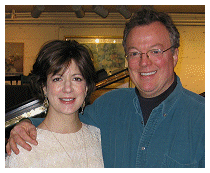
Michael Sweeney has over 30 years of experience in rebuilding grand and baby grand pianos and is a Registered Piano Technician and member of the Philadelphia Chapter of the Northeast Region of the Guild.
Call now: 610-688-6155
For state specific information:
As with most professional careers, the expertise of a piano rebuilder depends upon several interrelated factors. The importance of each factor is difficult to weigh, but an essential ingredient, one that perhaps grounds all the others, is a sustained, even passionate interest in the details of the craft. Many people outside the field of piano rebuilding don't understand where this interest comes from. Customers who come into our piano rebuilding shop are often perplexed as to why we do what we do.
Why would we do what we do? It is a good question. At first glance, piano rebuilding can seem incredibly chaotic and the task of the piano rebuilder endlessly and even hopelessly complicated. In fact, the technical aspects of piano rebuilding seem to place the rebuilder in a completely different category apart from the performer. This technical realm is one of the reasons why the distinction between the art of playing the piano and the craft of rebuilding the piano remains a meaningful distinction.
Especially in biographical sketches, music critics often attempt to describe what it is that initiates and then sustains an artist's career, but rarely, if ever, do they question what it might be that inspires and propels the career of the piano rebuilder. And yet, the very same question can be posed to piano rebuilders as it can to performers and composers. It is a universal kind of question, an ancient question, in fact, one that guides many discussions about the nature of education and the relationships between knowledge, interest, inspiration, motivation, etc.
So what is this dynamic and powerful force which propels the piano rebuilding student forward? Where does it come from? How is it able to sustain the rebuilder's attention? How is it able to feed the will needed to learn and overcome the incredibly difficult hurdles that are required to become an accomplished professional piano rebuilder? It is an interesting and somewhat mysterious question, intertwined with and perhaps even grounded in personal experience and events often reaching back to early childhood. And it is related to the larger philosophical question as to the nature of music and why music is such an integral part of being human. It is related as well, to the ancient questions concerning the hands-on nature of technology. In fact, piano rebuilding can stand as an example of how the piano rebuilder becomes the intersection between music and technology.
Although the exploration of this question doesn't make for blockbuster films or best selling histories and biographies, it is a question that gets asked by customers who come to our piano rebuilding shop.
Michael Sweeney's career in piano rebuilding began much like any typical student of music. He began studies as a performance major, but soon found that his interests were evolving toward a certain concentration. Playing the piano was certainly a high priority goal, but he also found the logical aspects of music theory compelling, as well as the technical aspects of high quality sound production and reproduction. In his studies, Michael found that he enjoyed exploring the relational dynamics the composer must understand between the various instruments that make up the classic orchestral ensemble, but especially how such instruments relate to that greatest of all instruments, the grand piano. This led to an exploration of the details and structural dynamics of the piano itself, its rich history, how the piano is made, maintained and the process of rebuilding them.
During this time of study, Michael began to consider the prospects of becoming a piano rebuilder. As electronic keyboards and synthesizers were flooding the market, if not the stage, he wondered what would become of the acoustic piano. Would the fast moving electronic craze eventually replace the acoustic piano all together? In his endeavor to think this through, Michael became fascinated by the special place the United States played in the heyday of acoustic piano manufacturing, the 19th century. American ingenuity, the industrial expansion of a thriving young nation in combination with the vast old growth forests of North America helped make the U. S. the primary producer of high quality pianos with the world's best soundboards. And because Michael had started his education in piano performance, he knew, like so many other pianists, that the electronic keyboard would have its place in music, but would not and could not replace the grand piano. He saw that piano rebuilders in the 20th century (and now the 21st century) would provide a valuable service, one which was not only personally fulfilling to Michael, but one which he considers a respectful tribute to the greatest musical instrument of all time. This interest and conviction has remained with Michael for over 30 years.
Even though the task of rebuilding a piano might sound easy, there are proper parts, tools and piano repairing procedures. As reported on the Piano Technicians Guild Web site: "It's important to remember that unsuccessful amateur repairs are usually much more expensive to fix than the initial problem and may decrease the value of your instrument."
We are a professional Piano Rebuilding Service. Repairing, rebuilding, restoring and refinishing your piano is what we do best. The grand piano in all its incredible aspects drives our interests. Piano rebuilding is like logic. It's a philosophy. It's our livelihood and we love the work. Call Michael Sweeney today (610-688-6155 ) for honest answers about piano rebuilding.
Remember, our piano rebuilding service focuses on grand and baby grand pianos exclusively.