

Piano restoration is a living 'old world craft' that requires excellent tools, fine metals, old growth wood, paints and finishes applied with precision by skilled human hands.
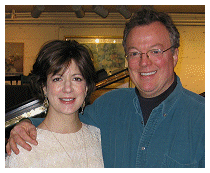
To guarantee the highest possible quality of craftsmanship, Michael Sweeney specializes in Grand and Baby grand pianos exclusively. Not only will he return your piano back to its proper condition musically, but will restore its cabinet and finish beyond your expectations. We have delighted over a thousand piano lovers with our rebuilding and refinishing. We will restore your piano to better than new for less than you would imagine.
Michael Sweeney has over 30 years of experience in rebuilding and restoring grand and baby grand pianos.
Call now: 610-688-6155
Each restored piano includes:
Our Piano Restoration Process takes 25 steps to complete. We guarantee that you will be delighted with the results of our careful work.
{@description}
The complete restoration of your piano requires a careful, professional approach. Before we disassemble the cabinet and parts, including the strings and the cast iron plate, we take several important measurements, including the distance between the plate and the soundboard, the tightness of the tuning pins in the tuning block, and the exact amount of down bearing. These preliminary calculations are important for proper piano restoration since they will help with the goal of reestablishing your piano's proper tone.
Note: In most cases, piano restoration actually improves sound quality since the piano's proper tone has been lost from age, neglect and/or abuse. With new strings, new hammers, and a repaired or replaced soundboard, our customers are often completely surprised -- and delighted -- by the improved tone and sound quality of their restored piano. In fact, the improvement in sound quality is often the most cherished result of piano restoration. That, and the beauty of the restored piano cabinet.
Once the measurements have been recorded, piano restoration continues with the removal of the legs and pedals. Then we remove the music rack, the lid, the keys, the cheek blocks, fall board, the action and dampers. At this point, we are ready for the delicate task of removing the strings, being careful to lower the string tension in a controlled, uniform way. Then we remove the tuning pins from the pin block and then the plate.
While the keys are out of the cabinet, we remove the old punchings from the key frame, clean and refresh all the wooden parts, polish the guide pins, replace the back rail cloth and add new punchings. We also rebush the keys, repair any loose capstans, and replace the keys themselves, if needed.
Once the cabinet is empty, we check for damaged, loose or deteriorated joints and repair them with the finest wood glue. We then strip the finish, sand and refinish the surface, furniture parts and bench with 22 coats of lacquer. This process insures restoration of the cabinet to its original color and sheen.
With the soundboard out of the piano cabinet, we carefully inspect it to see if it warrants repair or needs complete replacement. If the soundboard can be repaired, we fill cracks with spruce soundboard shims, again with the highest quality wood glue. We remove the old finish, then subject the soundboard to repeated sanding, using finer and finer garnet paper. We spend extra time with this phase of the piano restoration process to make sure that all the old finish has been completely and absolutely removed from the wood. Then, after applying a very fine, light yellow stain, we re-varnish the soundboard with repeat sanding until the finish is perfectly smooth.
The piano restoration continues with close inspection of the bridge, looking for splits or cracks in the wood as well as corroded, oxidized and/or broken bridge pins. Then we inspect the pin block, looking for cracks and other damage. If the piano needs a new pin block, we make sure that it fits perfectly. This will ensure that your piano retains its tuning longer. We also remove and inspect the underlever tray, tightening the underlevers and checking the felt bushings and the damper guide rail.
The plate must also be carefully inspected for damages. We remove all the old felt and pin bushings before we thoroughly clean its surface and repaint. Once the plate is back to a pristine condition, we reinstall and realign it so that the fit of the plate is exact and resting evenly. Then we set the down bearing and install new strings and the proper size of tuning pins.
Before the action is reinstalled, the new strings are tuned by a procedure known within the industry as "chipping" or "chip tuning." Chipping is a way to initially tune and raise the pitch to about an octave below concert pitch. This process takes some time because tension is being added while the down bearing is being set which must be done with control and precision in order to eliminate the possibility of damage to the plate.
On the action we remove the old felt from the damper blocks, refinish them, then cut and install new damper felt. The new felt requires regulating the dampers to the back of the key and the sustain pedal. At this phase of the piano restoration process we also shape, file and space the hammers. Then we reestablish the proper hammer height in relation to the key height and dip for proper after touch. We also adjust the let-off, drop and back checks.
Note: piano restoration often requires the replacement of hammer shanks and flanges, whippens, damper heads, springs, screws, the damper lift rod, hammer rail cloth, screw punchings, hammer butt springs, etc. We believe that the piano restoration is not complete unless everything that needs replacing is replaced. We guarantee a thorough inspection of the various parts of your piano.
When the restored action has been reinserted into the cabinet, we make sure that the striking point between the hammer and the strings is perfect. This insures the very best tone for your piano. Then we tune the piano repeatedly, adding tension until concert pitch is achieved. We then refine the damper regulation once they have settled in. We clean and polish all the cabinet hardware before the final assembly. Since new strings always stretch, we continue to tune and re-tune the piano during this initial phase of stretching because it helps the piano stay in tune longer once the piano restoration process is complete.
If you have questions or would like to talk to Michael Sweeney personally, please call 610-688-6155.
For state specific information: